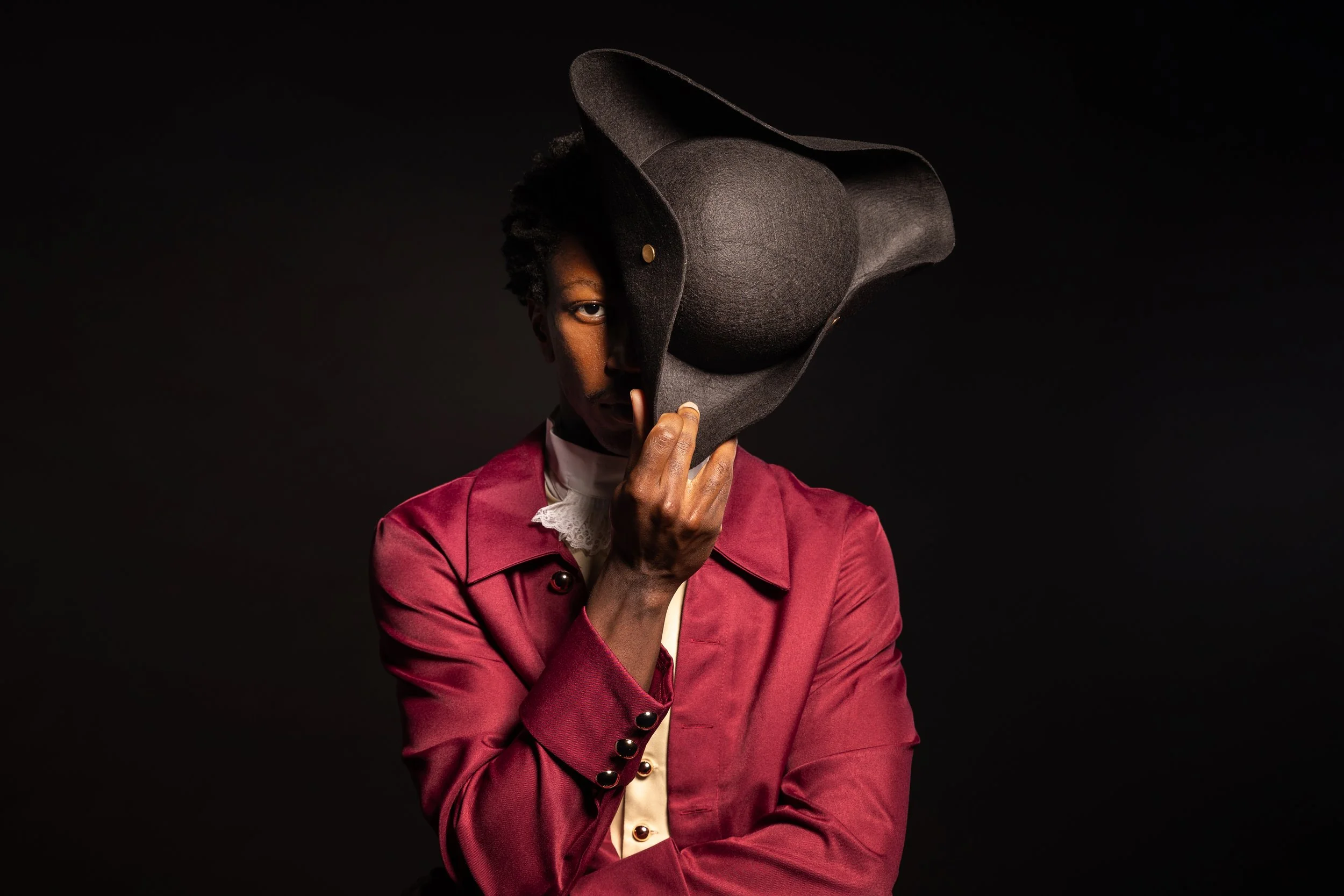
“In the dark shadow of the grove, on the margin of the brook, he beheld something huge, misshapen, black and towering.”
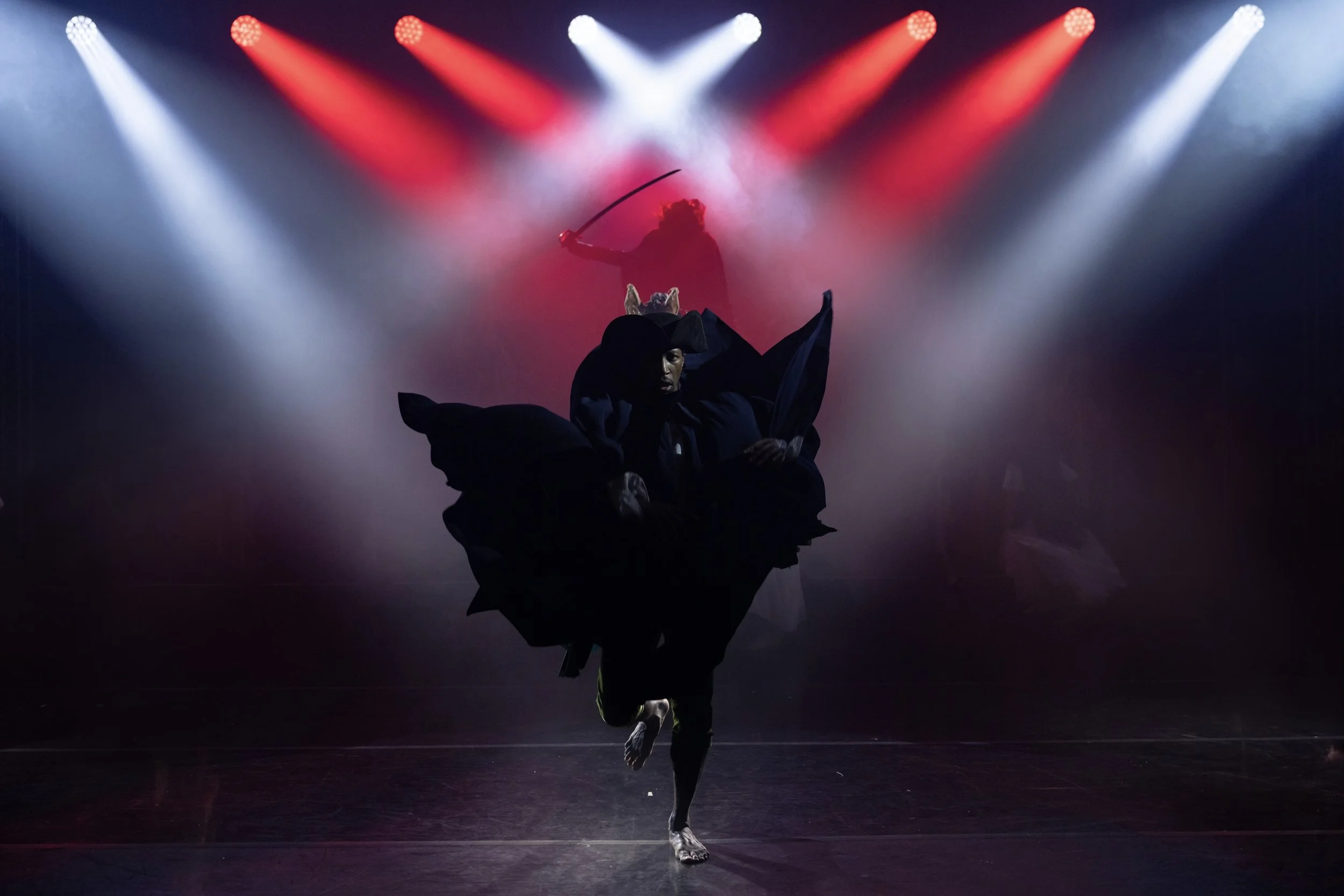
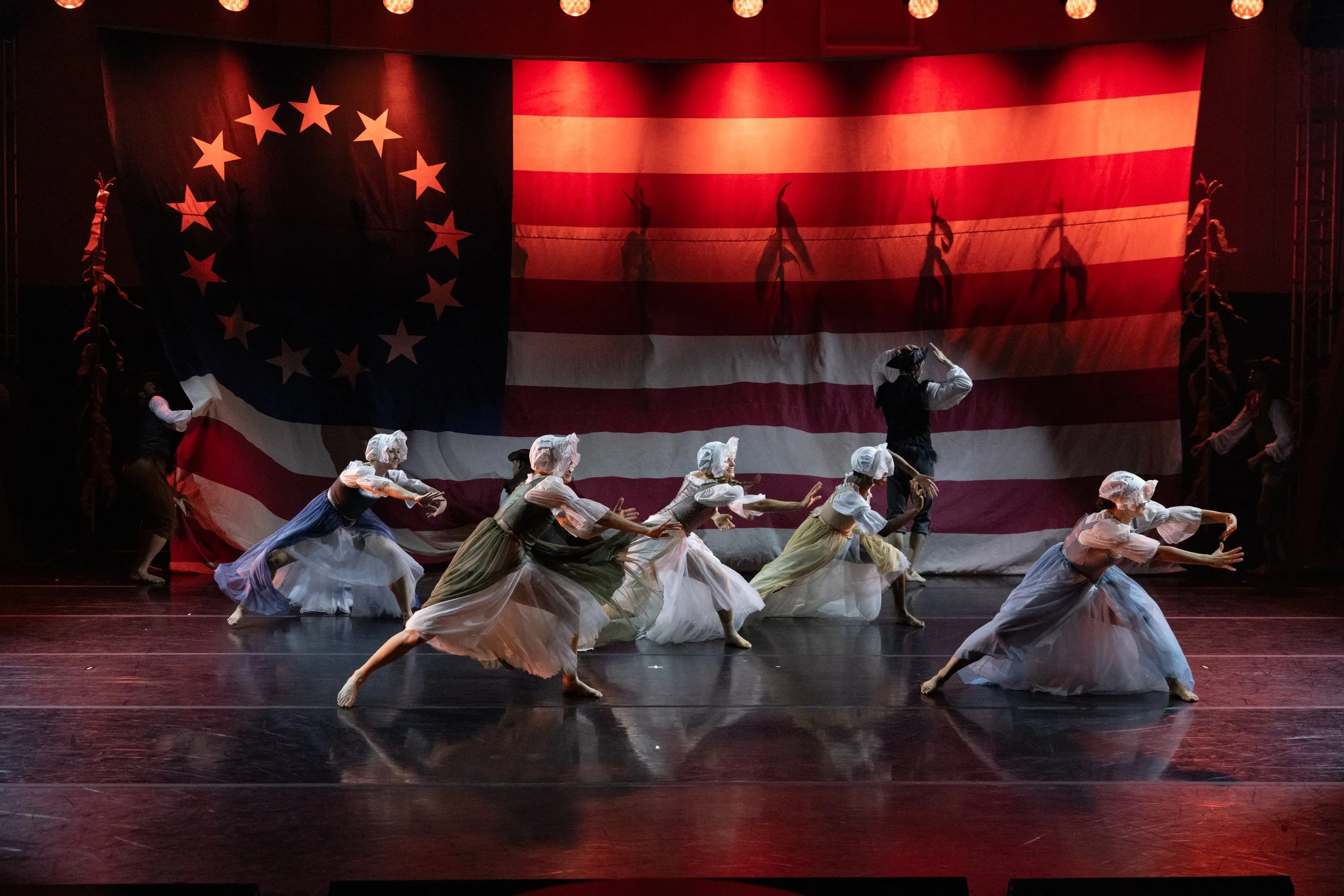


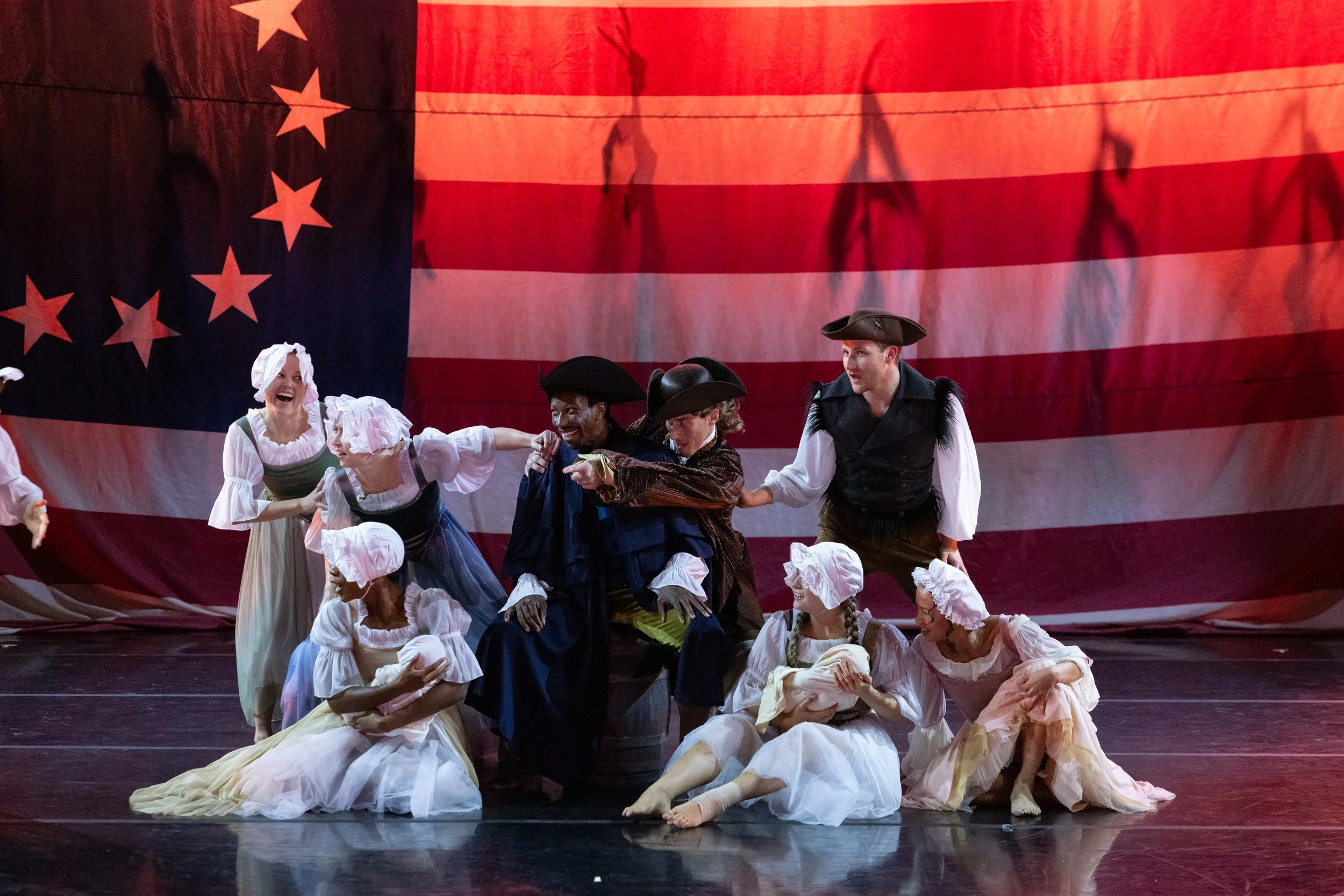
The Vision.
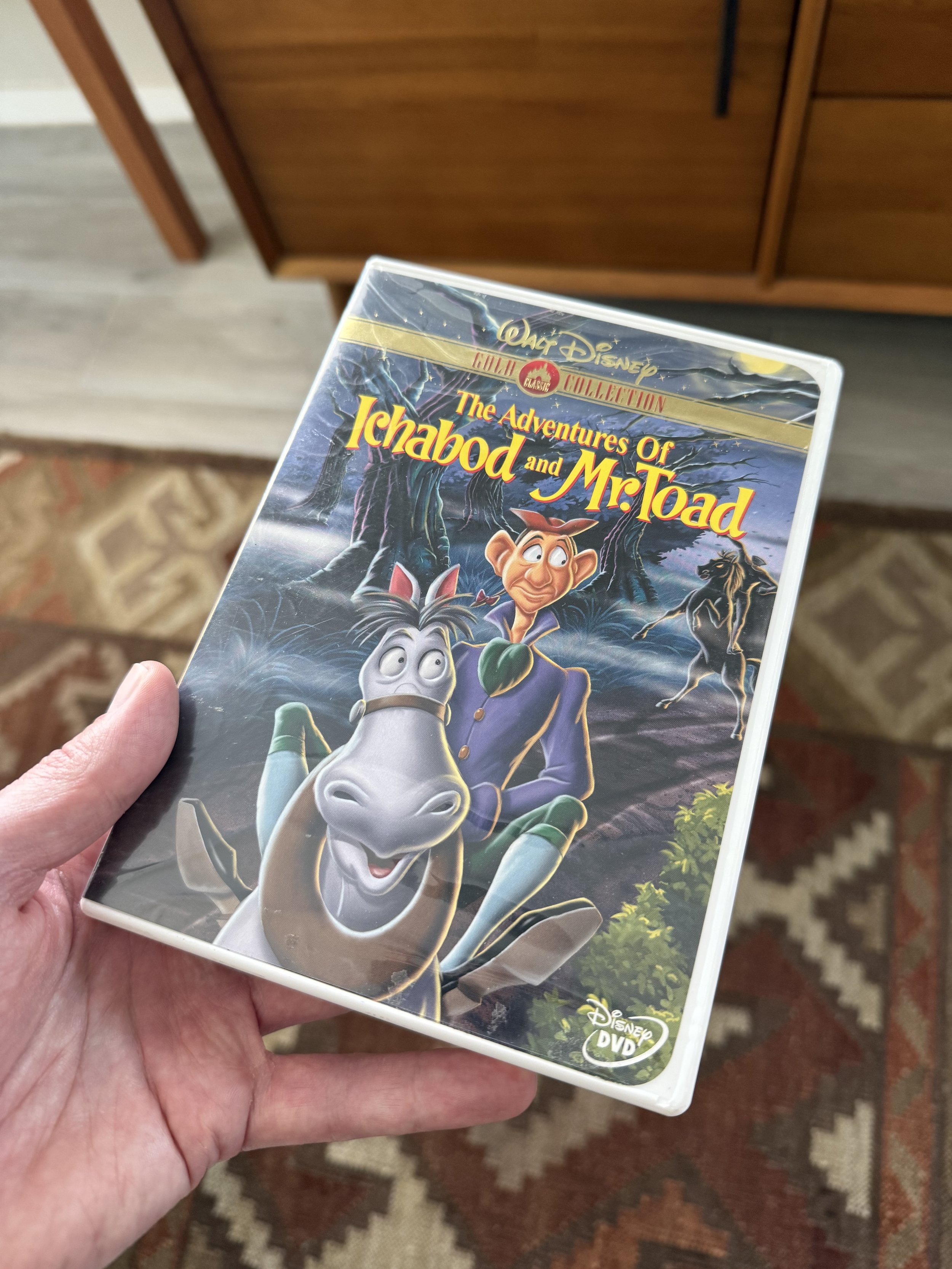
On Friday nights, my family used to go to the video store, and my sister and I were allowed to pick one movie to rent. More often than not, I chose Disney’s 1949 The Adventures of Ichabod and Mr. Toad. It completely captured my imagination (and made me a lifelong Bing Crosby fan). I was a scaredy-cat as a kid (I am still one), so I’m not sure why I was so drawn to this story where the “hero” is probably murdered by the terrifying Headless Horseman and his flaming jack-o-lantern.
I think partially I was drawn to the scared, misunderstood, and bullied outsider presented in Ichabod Crane. As an adult digging into Washington Irving’s novella, he seems to me a more complicated and less likable character, but that makes me lean in; that makes the story even more compelling and curious. Do we actually root for the Horseman? for Brom Bones?
This story moves. It is kinetic. The novella’s narrator Diedrich Knickerbocker tells us that the horseman is “hurrying along in the gloom of night, as if on the wings of the wind.” Ichabod is described as resembling “some scarecrow eloped from a cornfield.” It has rowdy local boys and coquettish local girls. It has everything you might want in an evening of dance theatre: a complicated protagonist, a romance, a barn dance, a chase, a ghost, and a delightfully ambiguous ending.
The Production.
It began as a conversation with Joshua Blake Carter in the summer of 2024. I wanted to create a new experiential evening-length dance theatre work in the horror genre for his company Dance Kaleidoscope. We eventually settled on Washington Irving’s “The Legend of Sleepy Hollow” as an anchor and began dreaming.
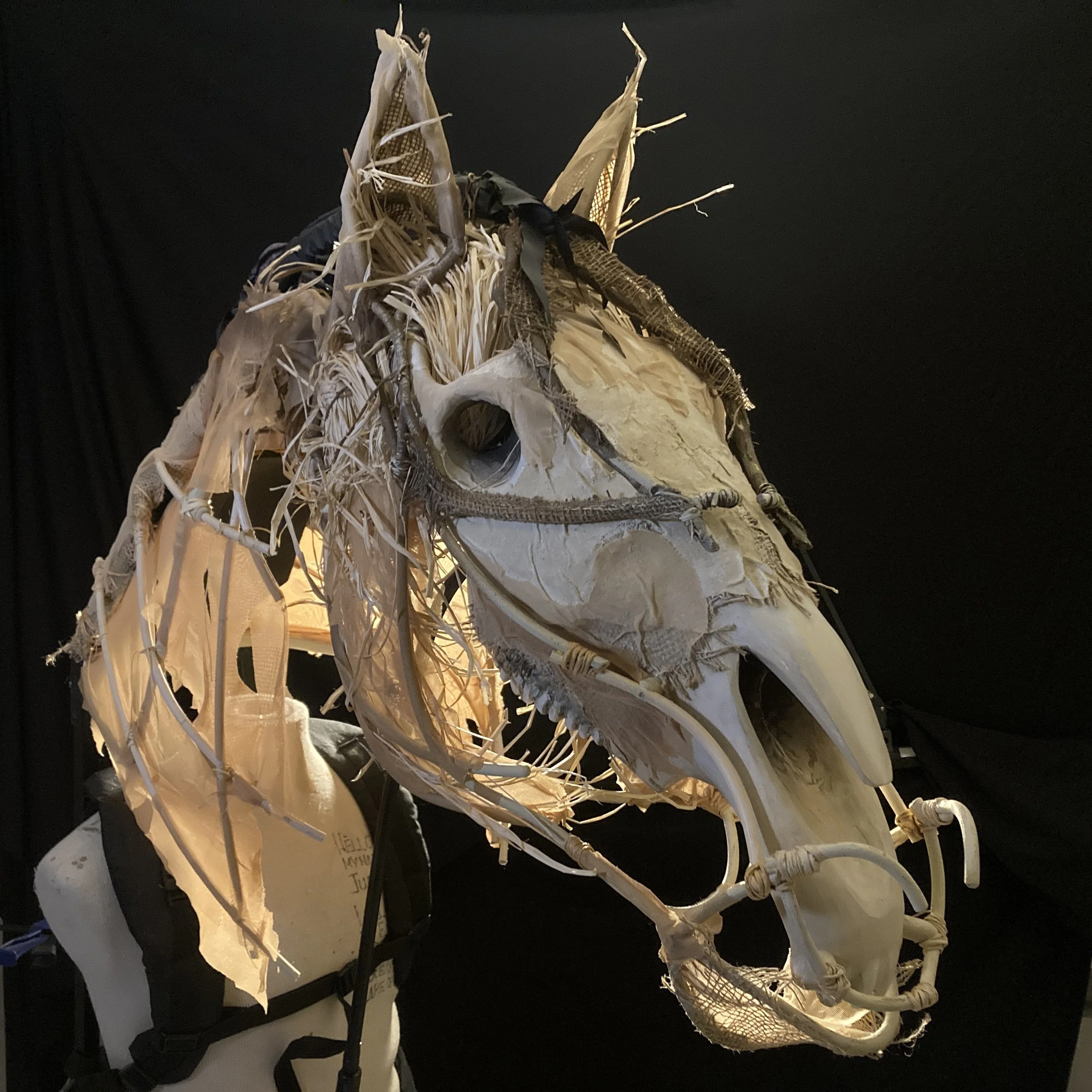
My first question was how to accomplish the Headless Hessian. We want something scary and uncanny. We decided it could be effective as a puppet. My cousin Nicholas Peugh was a master puppeteer for Walt Disney World for many years, and he helped us identify Monkey Boys Productions as the right builder for our Horseman puppet. Nicholas will also serve as Puppetry Coach for the production.
My longtime collaborator Brandon Carson will write original music that incorporates psalms and Revolutionary War tunes. Liz Bourgeois will provide the costume designs.
We have added William Boles to our team as scenic designer.
Program Letter.
“Whatever violence had been done there, it had opened the house up, as surely as a knife slits a fish's belly; and through that cut, the wound in the world, the dead peered out, and had their say. That was the rumor anyway . . .”
Clive Barker, Books of Blood: Volumes one to Three
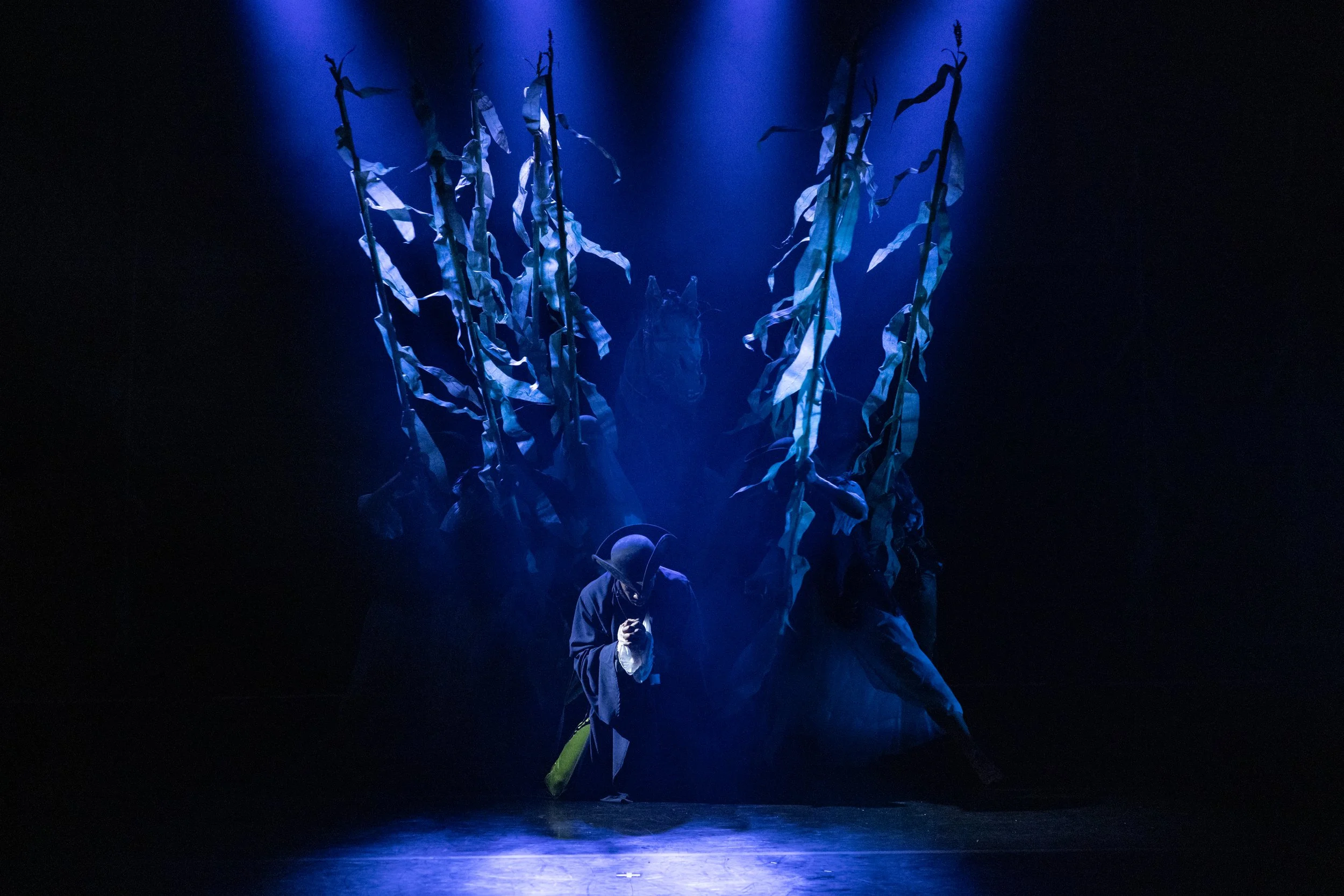
For me, this quote unlocked this iteration of “The Legend of Sleepy Hollow.” One of the most surprising things about Irving’s iconic ghost story is that the Headless Horseman isn’t the real horror. The real horror is what’s left behind in the town in the wake of the Revolutionary War. A majority of the citizens of Sleepy Hollow were descendants of Dutch immigrants who spoke Dutch and must have had a complicated relationship with their new country, which was using education and the justice system to sideline their language and culture. The Hudson River Valley, where Sleepy Hollow is situated, was ravaged by the war, and when our story takes place, what will no doubt be a brutal winter is fast approaching. Those conditions of trauma and scarcity can breed fear, anxiety, hate, and more violence.
Ichabod Crane is a complicated and messy “hero.” He’s described as an unattractive man with “the dilating powers of an anaconda,” mainly interested in inheriting Balt Van Tassel’s very productive and lucrative farm. What’s compelling to me about Ichabod is that he is someone (not unlike me) who loves stories about ghosts, goblins, and witches (Ichabod’s favorite book is one by Cotton Mather, a historical figure who believed wholeheartedly in witches and helped prosecute them during the Salem Witch Trials) but who is also so imaginative that he can tie himself in knots with fear. This creates the perfect storm for an interloper from the “civilized” city in a rural country town steeped in custom and superstition who has been through a very difficult period.
Of course, people contain multitudes, and with the dark and heavy, there is also light, laughter, compassion, and love. As the master Stephen King writes, “there is no horror without beauty; no discord without a prior sense of melody; no nasty without nice.”
The artists you see on stage tonight, as well as the ones behind the scenes, found personal ways to connect to this dark dream and, in doing so, clarified, challenged, and improved it; this production could not be what it is with another group of people.
Finally, thank you; more than half of the performance happens on your side of the footlights. We wouldn’t have a purpose without you.
Photos by Moonbug courtesy of Dance Kaleidoscope.